• logoThe guitar is obviously a very popular instrument, the creative applications of which go well beyond the folk/pop idiom.  Here are some general principles and notions for composers who would like to write for the guitar but don’t have much experience with the instrument.

    -notes sound an octave lower than they are written

    -the left hand can usually stretch the span of four frets (one finger per fret) and can extend to six frets if needed

    -barre – the first finger holds down some or all strings at a particular fret

    -left hand:  pinky – 4, ring – 3, middle – 2, index – 1

    -right hand:  thumb – p, index – i, middle – m, ring – a, pinky – u

    -Roman numerals indicate the fret at which the first finger of the left hand is placed

    -ff dynamic somewhat questionable

    -guitar notes decay rapidly; will be masked easily in thick passages

    -long notes are more easily obtained on the lower strings

    -very quick notes are easily obtained; repeating notes depend on the skill of the player; 16th notes at qtr=132 are safe

    -the right hand determines the loudness and timbre of the guitar’s tone, but through articulation, the guitar’s version of the violin’s bowing techniques, the left hand also controls much of the musical expression

    -guitarists can play several notes on a single pluck

    -string choice can be composer-determined to control subtle shades of timbre

    -string choice can also be used for a klangfarben effect (i.e., same note, different fingerings for shades of timbre)

    -where to pluck the string can also be determined (ponticello, tasto, etc.)

    -what to pluck with can also be determined

    -arco with bass bow is possible; can only use the first or sixth strings alone or all of them at once

    -most standard string techniques (vibrato, scordatura, glissando, multiphonics, etc.) can be produced on the guitar

    -two kinds of percussive techniques:  striking the strings (tambura) and striking the wood (golpe)

    Keep up with my work and join the community conversation on my Facebook page!

    Follow me on twitter!

  • logoGeneral Information

    In the aria “Empiro, dirò, tu sei” (from Giulio Cesare), Cesare condemns Ptolemy for his tyranny in beheading Cesare’s military rival.

    Instrumentation of This Aria

    Tutti violins in unison

    Continuo

    Voice (Cesare)

    Mood and General Structure of Text

    The text consists of two tercets.  The rhyme scheme (in Italian) is AAB.  The mood conveyed by the text is both anger and indignation.

    Basic Musical Form

    This piece is in da capo aria form (ABA).  The B section is differentiated from the A by a sudden modulation to the relative major key (Eb), within this section there are modulations to different keys than presented in the A theme, and the B theme contains a stopping point for a cadenza (bar 56).

    Principal Motives

    Descending scale pattern (bar 1)

    Melodic sixteenth note pattern (high-low-low-high) (bar 3)

    Sudden appearance of a melodic tritone (bar 8)

    Relationship Between Voice and Orchestra

    The orchestra presents, in the introduction, several important motivic ideas which are later taken up by the voice.  While the voice is singing, the orchestra presents basic accompaniment material to reinforce the harmony.

    Harmonic Structure

    Introduction          1 – 9                 C minor (i)

    “A” Theme              10 – 11             C minor

    12 – 19             Eb major (III)

    20 – 21             Ab major (VI)

    22 – 27             G minor (v)

    28 – 42             C minor (i)

    “B” Theme               43 – 45             Eb major (III)

    46 – 47             F minor (iv)

    48 – 50             Bb minor (vii)

    51 – 52            C minor (i)

    53 – 58            G minor (v)

    (repeat of “A” theme)

    Text Painting

    When the words “Empiro, dirò, tu sei” (“You are a tyrant, I say”) first appear (bar 10), they take up the downward scale motive first present by the orchestra in the introduction.  This seems to give the impression of condemnation, of looking down on Ptolomy.

    “Sei tutto crudeltà” (“You are cruelty itself”) is frequently treated melismatically (bars 13-16, other places), which gives it special emphasis.

    “Che in sen non ha pieta” (“Whose heart contains no pity”) is stated several times in succession and concludes the “B” section, treated melismatically in the second to last statement.

    Overall, Handel skillfully uses the music to emphasize the spirit of this aria.  Cesare’s rage towards Ptolomy is made quite clear.


    Keep up with my work and join the community conversation on my Facebook page!

    Follow me on twitter!

  • Tried-to-End-Holocaust-1500x430

    El Malei Rachamim (God full of compassion) is a Jewish prayer for the departed that is recited at funeral services, on visiting the graves of relatives (especially during the holy month of Elul), and after having been called up to the reading of the Torah on the anniversary of the death of a close relative. The prayer originated in the Jewish communities of Western and Eastern Europe and since the end of the Holocaust, the prayer has been adapted as a memorial prayer for the victims of the Holocaust and Nazi persecution. The full text (which has been freely adapted in this piece):

    O God, Who art full of compassion, who dwellest on high, grant perfect rest in Thy Divine Presence to all the souls of our holy and pure brethren whose blood was spilt by the murderers in Auschwitz, Belzec, Bergen Belsen, Dachau, Majdanek, Sobibor, Treblinka and other extermination camps in Europe; who were killed, strangled, burned and buried alive for the sanctification for Thy Name. For whose souls we now pray. May their resting place be in the Garden of Eden, may the Master of Mercy shelter them in the shadow of His wings for eternity; and may he bind their souls in the Bond of Live. HASHEM is their heritage, and may they repose in peace in their resting places. Now let us say: Amen

    This setting features of mix of traditional and contemporary composition methods to create a highly emotional and deeply meaningful experience for performer and listener. The subject is explored from a number of angles, including reverence, mystery, grief, anger, and hope.

    Get the music here!

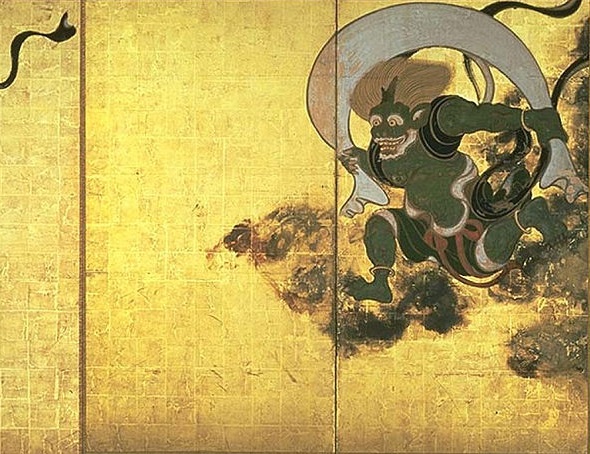
  • Fujin-zoom-up

    Finding inspiration from traditional Japanese mythology, I explore and illustrate the concept of “wind” from varying perspectives in this piece (from calm breezes to turbulent storms). In addition, the piece uses a Japanese folk tune as the musical basis for the variations.

    Get the music here!

  • t

    I wrote this piece as a gift for a friend of mine and a fellow horn player who went into the U.S. Peace Corps. In order to commemorate her service, I decided to write a fantasia using a North African folk tune (Kadria aârak) as the principle material. While writing I made it one of my goals to make the two parts as equal in weight as possible (the first part is not necessarily dominant, as is usually the case in traditional duets).

    Get the music here!

  • 2014 025 MI Quincy Mine 9 Ruins DS 2017

    Dramatic and colorful, this piece (which features a trumpet soloist with flute, clarinet, violin, viola, cello, and piano) will add a distinctive flare to any performance occasion. The industrial structures of the Quincy Mine have loomed over Michigan’s Copper Country since 1846 – imposing, evocative, even hauntingly beautiful, especially as the sun sets on the otherwise pristine rural landscape. The machines have been silent for decades now but the edifices remain as a sort of memorial. I have endeavored to reflect in my music the unusual, poignant beauty of this place.

    Get the music here!

  • OIP

    The voice may be treated as any other timbre in the orchestra, capable of producing colors well beyond the standard sung tones.

    Here are some ideas for unique timbres vocalists may produce.  As always with contemporary methods, there is no standard notation so make your instructions as clear as possible to the performer.

    -sing approximate pitches

    -speak on assigned pitch level

    -normal speaking voice

    -falsetto

    -murmur as low/high as possible (or at various relative pitches)

    -gradually transition from one timbre to another (e.g., from speaking to singing)

    -vocal glissando

    -sing as low/high as possible

    -shout/scream (use sparingly if writing for students/amateurs, who may end up damaging their voices)

    -laughter

    -mocking laughter (expel breath as rapidly as possible while laughing)

    -audible inhale/exhale

    -use of isolated syllables/phonemes (rather than recognizable words)

    -whispering

    -unvoiced sounds

    -sigh

    -lip quaver (vibrate lips with finger while humming)

    -vibrating lips

    -flutter tongue between lips

    -tongue clicks

    -hiccup (inhale quickly)

    -cough

    -vocal rasp (spoken with raspy, gravelly vocal production)

    -hiss on “s” or “sh” sound

    -rolled “r”

    -white sound (fortissimo “h”)

    -hands cupped over/around mouth

    -flare (very fast vibrato)

    -uneven vibrato

    -indicate with open mouth, half open mouth, or closed mouth

    Check out my choral works (and other compositions) here.


  • R (2)

    Creating a piece of music certainly requires some fantasy and inspiration, but mostly it’s about crafting and implementing a well-thought-out design.  The following presents many of the questions composers will have resolved before committing a single note to the blank page.  How explicit this process of answering the questions is often depends on the experience level of the composer (typically student composers will need to write these out in detail while master composers may plot most or all of this out mentally).

    This is not meant to be an exhaustive battery but a jumping off point for creative thought.

    1.  General Description of the Piece

    -Will it be programmatic?  Have any extramusical meaning(s)?  Or will it be absolute? Abstract?

    -Of what personal significance is it?

    -What will it communicate to the world?

    -What is the novel construct (if any)?

    -Why is anyone listening?

    2.  Title

    -Does it clearly convey the intended meaning of the piece (reflected in the Description)?

    3.  Audience

    -For whom are you writing? (Educated musicians, enthusiasts, general public, peers…)

    -How will your methods reflect your desire to reach this audience?

    4.  Skill Demands

    -Is the piece intended to be played by students, amateurs, or professionals?

    -Will it conform with general publishing standards of difficulty?

    5. Formal Scheme

    -Will the piece be in one or several movements? (Each movement needs to fit in the descriptive arc of the piece. Determine proportions between movements.)

    -Outline sketch of the piece or of each movement (ABA, rondo, sonata, theme and variations…)

    6. Length

    -Based on Skill Demands and Formal Scheme

    7.  Performance Medium

    -What timbres are required to express your meaning?  (Wind band, orchestra, percussion ensemble, piano solo…)

    -What role will each color play during major formal events?

    8.  Style Overview

    -Where is it on the continuum from traditional to avant-garde?

    -Focal ratio of melody/harmony (traditional) to texture/timbre (avant garde)

    –Impacts on the importance of beat/meter (strict to free)

    -Broad-based possibilities:

    –Direct imitation of old style (unironic and unaffected use of traditional idioms)

    –Quotation/Juxtaposition of old styles within contemporary framework

    –Appropriation of old styles to contemporary idioms (neo-classicism)

    -Availability of Extended Timbral Techniques (e.g., multiphonics, key sounds, color fingerings, muting, unusual playing area/striking media, etc.)

    9.  Harmonic Language

    -Consider balance between consonance and dissonance

    -Broad-based possibilities:

    –Tonal/Modal (prominent pitch centering)

    —Traditional (Common Practice; heavy emphasis on “resolving” dissonance)

    —Non-Traditional Triadic (ranges from modal borrowing to panchromatic usage)

    —Non-Traditional Scales (e.g., whole tone, pentatonic, octatonic)

    –Atonal (avoidance of pitch centering; consideration of continuum of dissonance)

    —Chromatic/Free Tradicism

    —Pandiatonicism

    —Serialism

    —Other row/cell structures

    —Free Chromaticism

    10.  Melodic Usages (consideration of developmental depth)

    -Broad-based possibilities:

    –Cellular (micromotives; unordered rhythmic sets)

    –Motivic (ordered rhythmic/melodic sets of high salience)

    –Thematic (distinctive melodic phrases)

    –Through-composed

    –Amelodic

    –Proportionality (common in the Renaissance; base unit defines relationship to other durations in a given space; e.g., determined proportion of 1:3:2:1 where the basic unit is a quarter note results in subsequent values equaling 3 beats, 2 beats, and 1 beat; subsequent values can be subdivided and/or silent)

    –Musique Mesuree (primarily for use in vocal music but may be adapted to instrumental use; rhythmic values are portioned out according to syllabic emphasis)

    –Ostinato (repeated verbatim deployment of an idiosyncratic rhythmic motive or phrase)

    –Durational rows (predetermining rhythmic cells within a serial framework; developmental operands may be applied to the row)

    –Interval Exploration (predominately using one interval)

    11. Texture

    -Textures can be realized as Tutti or Less Than Tutti

    -Common textures:

    –Monophonic (one nonharmonized line; large ensembles: octave doubling may be used)

    –Homophonic (chorale-style harmonization of a line)

    —Primarily isorhythmic?

    —Limited rhythmic independence?

    –Heterophonic (one dominating part, other subordinate parts of accompanimental nature)

    —Consideration of accompaniment technique

    –Polyphonic (more than one equal part simultaneously)

    —Free counterpoint

    —Limited imitation

    —Structured imitation

    —-Canon (following voices may be developed with augmentation, diminution, etc.)

    —-Fugue

    —-Ground Bass

    —-Chaconne (repeated chord succession)

    —-Passacaglia (repeated theme in bass)

    –Pointiliste/Klangfarben (costant timbral contrast of primary importance)

    —Atmosphere or foreground

    Any of the above melodic/rhythmic concepts may be further developed with the following operands (may be combined; rhythm/pitch considerations may be combined or separate)

     -Augmentation

    -Diminution

    -Retrogradation

    -Inversion

    -Fragmentation

    -Interpolation

    -Extrapolation

    -Rhythmic Displacement

    -Significant Recontextualization

    You can download a Worksheet for Precomposition here.

    Keep up with my work and join the community conversation on my Facebook page!

  • horn

    As a both a horn player and a composer, I can tell you that the horn is a tremendously versatile instrument capable of producing unique and interesting colors outside of the standard open and stopped tones.  Today’s composer should be aware of the wide range of techniques the performer is able to render!

    As always with contemporary techniques, the notation is not standardized so the composer should include very clear instructions to the performer as to the desired effects and their intended method of execution.

    Note: obviously this is hardly the only place one can find this information. Any number of orchestration texts and horn-specific tracts will have some or all of these. I have compiled my list for the convenience of fellow composers. It’s important to note to some that no one owns the trademark or copyright to particular instrumental techniques that any person might execute.

    EXTENDED TECHNIQUES:

    -highest note possible (often a pinched sound with some additional static; request “with a clear tone” to guarantee that the performer will not attempt a pitch above his controlled range)

    -lowest note possible (a soggy, uncentered and perhaps wavering sound, very slow to speak; request “with a solid sound” to avoid an over-attempt for range if so desired)

    -plunger mute (“wa wa” possible; not frequently used; numerous pitch problems; must describe degree of cover desired)

    -cup mute (hollow, somewhat covered sound; may project a jazz-like quality; not frequently used and not readily available; allow at least 5 seconds before and after use)

    -whispa mute (very distant, completely muffled sound; also called a practice mute; very seldom used)

    -glass mute (12 oz. bottle with small neck; a hard, less vibrant sound that a straight mute; not frequent but effective)

    -cloth mute (medium sized rag; totally muffled sound; many pitch problems; usable in the middle and upper registers)

    -gradual transition (mute to open, vice versa)

    -unmeasured rapid mute changes (a subtle wa-wa effect in upper two octaves; may project more like a timbral “vibrato”; very subdued effect, must less audible than other brasses; mute might hit the bell surface)

    -rhythmic mute changes (a prescribed rhythmic application of the subtle wa-wa effect)

    -unmeasured rapid mute changes with multiple tonguing (non-coordinated combination of effect which works best in second octave because of the occasional break; causes an almost cartoon-like sound; quite effective in multiple voice groupings)

    -¾ stopped or ½ stopped (most effective from pp-mf; excellent echo effect; use instead of cloth mute)

    -half-step hand glissando (a smooth slide to the subsequent note with an obvious tone color change; effective, often-used; gives a sigh-like sound)

    -unmeasured rapid hand changes with multiple tonguing or rapid tonguing (much more versatile that rapid mute movements and more audible; volume will fluctuate between the open and closed sounds)

    -“scoop up” into a note, “scoop down” into a note (tends to have jazz connotations)

    -attack without the use of the tongue (“h”) and rhythmically undulate the air flow

    -intentionally sloppy attack

    -gradual change from crisp distinct attacks to smooth and gentle ones with less separation

    -flutter tongue

    -spit tongue attacks (very short, loud, sudden, indiscriminate pitch; purse lips together as in the consonant “p” and force out what little air is between the tongue and the aperture approximating the sound “pt”)

    -flexible speed trills

    -alternating trills (between half and whole step)

    -irregular speed trill

    -contour glissando (a smooth, elongated, gliding glissando which follows the approximate contour designated in the notation; do suggest the use of half valve)

    -slow glissando (a very gradual slide to the resultant note)

    -jazz effects:  bend/dip, doink/doit, fall-off, flip

    -plop (a quick drop downward into the notated pitch)

    -ghost tones (a half-valve pitch used within a regular line)

    -half-valve harmonic (a double tone with the upper octave ringing as if from a distance; play a c2 on the F horn and partially depress the first valve until the upper octave appears)

    -white noise pitch (an actual pitch with added and consistent static; difficult to sustain; good flexibility not likely; not possible at loud extremes or mid and low ranges; flatten or clamp down the aperture opening and force air through, holding a consistent distortion of the tone)

    -sucked pitch (a kissing or squealing sound of indefinite pitch, possible only in mid to high ranges; suck air inward through the aperture causing a vibration at the lips which will be amplified by the horn)

    -sing through the horn (falsetto)

    -in a perfect fifth, play the bottom note and sing the upper note (results in a “chord”)

    -unison singing and playing

    -horn used a megaphone (whisper/speak/shout into the horn)

    -air sounds (blow through the horn without buzzing; can be articulated and/or with valve sounds)

    – mouthpiece alone (hand pops, kissing, muted)

    -fingernail tapping on bell

    -play into a piano, a drum head, a tam-tam, or a sizzle cymbal

    -use a mouthpiece of a different instrument

    -bowing the bell (usually a bass bow works best)

    Keep up with my work and join the community conversation on my Facebook page!

  • logoFor those of you who have not yet read my bio, in addition to being a composer and a teacher, I am also a husband and a father.

    Over the past year or so, my wife has developed an interesting parenting-themed blog.  Today she asked me to write a guest article about what my life has consisted of for most of this week (spring break where I’m at).  Please head over there and read it!  Thanks, and I hope you enjoy it!

    Keep up with my work and join the community conversation on my Facebook page!