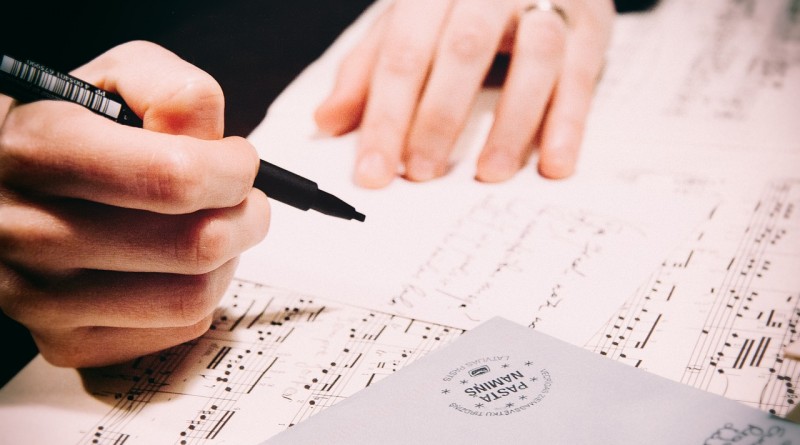
A piece of music, even an apparently very simple piece, presents to us a whole universe of ideas and approaches to them. We therefore need a way to organize these ideas in ways that help us to make sense of them, to understand better what the composer was trying to convey, and to become better composers ourselves.
One manner of doing so is dividing up a piece of music into its large component parts and further digging down into each of those areas, then putting it all back together, as if it were a sort of jigsaw puzzle, gradually revealing itself to us.
The questions I offer here should be viewed as practical points of departure for deeper analysis of both the structural and stylistic elements of compositions.
We look at a piece of music in its potential component parts: melody, counterpoint, harmony, variations, sectional forms, developmental forms, and serial and atonal methods.
Melody
We can further divide this down into pitch, rhythm and meter, contour, structure, and other elements.
-Pitch
What pitches are used in the melody? Do they form a scale?
Is there a pitch center? If so, how does it come to be established?
Are there any chromatic notes? How do they function?
If no traditional (common practice) pattern is used, can the pitch content be analyzed in terms of groupings of intervals?
-Rhythm and Meter
Is a metric grouping established?
What rhythmic patterns recur? How do these relate to the meter, if they do at all?
-Contour
Where are the cadences?
How do the phrases relate to each other? Are there instances of repetition, variation, contrast?
Are there small motives or melodic units that are being varied? If so, how?
Can the melody be reduced to an underlying pitch framework? How is this framework elaborated?
-Other
Consider: dynamics, text setting (if applicable), timbre, etc.
Counterpoint
What creates independence between the lines?
Is one line more important than another?
How do the lines relate to each other intervallically? What intervals or chords are used at opening and closing points? At other points?
Is a tonal center established? Is it the same in all the parts?
What is the rhythmic relationship between the lines? Do they trade these relationships?
Is imitation present? If so, describe its nature (between which voices, which intervals, time distance, strict canonic imitation, etc.)
How does each line develop? Does it use small melodic motives?
Are any contrapuntal techniques used? (Inversion, augmentation, diminution, etc.)
Is there invertible counterpoint present?
Is countermaterial used consistently?
Is there more than one important melodic idea presented?
How are the phrases constructed? Are cadences well-defined?
Is there a sectional plan to the piece?
How is overall form created in the composition?
Harmony
What sorts of sonorities are used? (triads, sevenths, nontertian, etc.)
How are the chords related to each other? Are the patterns of root movement?
Do the chords follow a large functional pattern?
Are some chords more important than others?
What sonorities are used cadentially?
How does the succession of chords relate to the rhythm and meter of the composition? Is there a prevailing harmonic rhythm?
Does the movement of the harmony help to establish the meter or work against it?
Is a tonal center established?
Are there changes of tonal center?
Are there changes of mode?
How do factors such as spacing, textural placement, and dynamics influence the harmony?
Variations
What is the basic material, or theme, of the work? Is it a melodic/rhythmic line, a harmonic pattern, a phrase structure, or tonal plan?
How is the material retained throughout the composition? Are any changes applied to the material itself?
How is the context around the material changed? Consider such things as texture, harmony, and rhythmic activity.
How many times is the basic material stated? Do these statements divide the composition into sections?
Is there any transitional material which is not a complete statement of the basic material? How is it related to the rest of the composition?
Does the composition suggest groupings of variations? Is there an overall formal pattern, such as ABA? If so, how does the composer accomplish these groupings? Are there returns of earlier variations?
Special Case: Cantus Firmus
Cantus Firmus treatment is often studied in a survey of variation techniques because one can frequently compare several different settings of the same cantus firmus and thus observe variant treatment.
What is the one line cantus firmus?
In which voice or voices does it occur?
How is it presented?
How do the other voices of the texture relate to the cantus firmus? Do they use motives from it?
Is there more than one statement of the cantus firmus?
Sectional Forms
Sectional form is a general term given to forms which have basically clearly defined and separable parts. Sectional forms such as ternary (ABA) or rondo can be more easily divided into independent units. Many characteristics of developmental forms are often combined with a simple sectional design.
What delineates sections? Are there changes of key, tempo, melodic materials, texture, etc.?
What is the internal phrase structure of each section?
How are the sections connected?
How many sections can clearly be identified?
Does a section return exactly within the piece?
What creates contrast between the sections? Are any elements retained from section to section?
What is the key scheme or cadential pattern of the work?
Are there any developmental aspects?
Developmental Forms
The term developmental forms usually refers to those compositions where development of material is a basic part of a formal design either in a separate section of the movement or throughout as an integral compositional process.
What determines the large sections of the work?
What is the basic material of the composition? Melodic lines? Rhythmic patterns? Chord progressions?
How is the material first presented?
How is it changed in the course of the composition? Is there a separate development section?
What elements are returned at the end of the movement?
Is it important to identify a second key area? Second thematic material?
Is there an introduction? A coda?
How are sections connected? Transitional material or abrupt change?
Serial and Atonal Compostions
What is the basic tone row?
How is it constructed? What intervals are used?
Does the row itself have any particular characteristics? Is it symmetrical, all-interval, etc.?
How does the composition use the row? In melodic lines? In chords? Are several row forms combined?
What are the audible organizing features of the composition? A certain texture, rhythmic pattern, melodic shape?
Are any of the elements of the row audible? Do interval patterns or row forms contribute clearly to the melodic, harmonic, or formal structure?
In atonal compositions not using a row structure, what is the basis for the pitch organization? Are there recurring chords or melodic units? Are there important pitch-class sets?
I owe a great debt of inspiration for this article to the work of Mary Wennerstrom, Ellis Kohs, and Reginald Smith Brindle.
 Brandon Nelson
Leave a comment